
ARN Security service brief
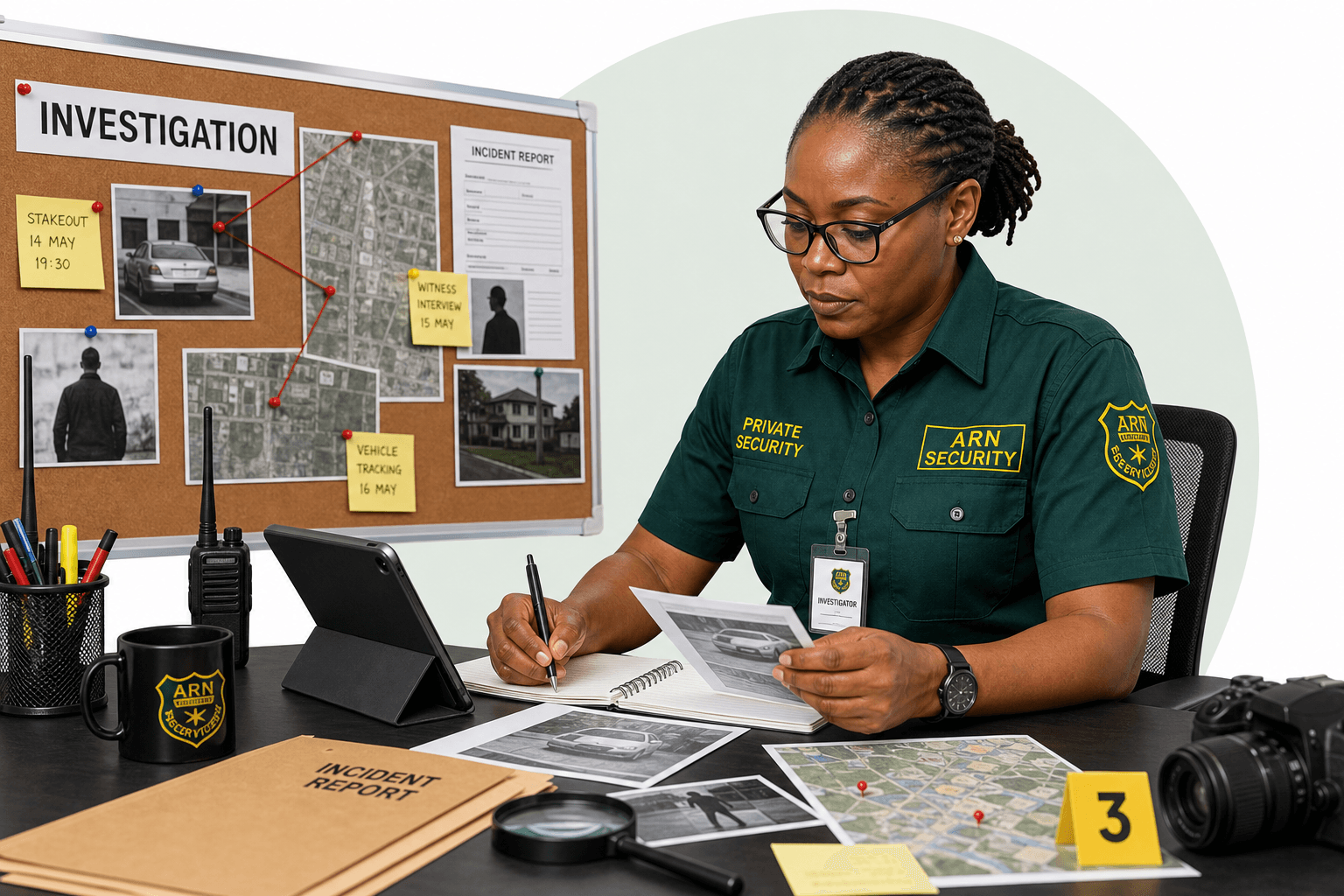
Private Investigations
A confidential fact-finding process for defined incidents, losses, misconduct concerns, and sensitive management questions.
- A clear case question and evidence boundary
- Organized findings that distinguish fact from allegation
- An appropriate management, HR, or legal handoff
Decision brief
At a glance
- Best fit
- Organizations that need careful internal fact-finding before operational, employment, insurance, or legal decisions.
- First step
- Define the incident, decision required, known evidence, authorized sponsor, and confidentiality boundary.
- Preparation
- Preserve relevant records, identify authorized contacts, avoid contaminating evidence, and state any urgent legal or safety concern.
- Implementation range
- From a focused incident review to multi-week case work. Timing depends on evidence volume, witness access, confidentiality, legal or HR coordination, and unresolved gaps.
Included work
What ARN provides
- Confidential intake and case scope
- Evidence and interview plan
- Fact-finding and record organization
- Findings report and authorized handoff
Engagement sequence
How implementation works
- 01
Intake
Clarify the allegation, decision, authority, urgency, evidence, and confidentiality limits.
- 02
Preserve
Identify relevant records, access, interviews, and steps needed to protect information.
- 03
Establish
Conduct proportionate fact-finding and distinguish verified facts, conflicts, and gaps.
- 04
Report
Provide a structured record for the authorized management, HR, legal, or insurer handoff.
Service-specific controls
Operational detail
- The case scope states the question ARN is being asked to establish.
- Reports separate evidence, source statements, analysis, and unresolved gaps.
- Sensitive findings are shared only with the agreed authorized audience.
Shared readiness
Client preparation and responsibilities
- Confirm lawful authority and an authorized case sponsor.
- Preserve records and avoid retaliatory or contaminating action.
- Obtain legal or HR advice where required.
Assurance
Quality control and review
- Case scope and evidence register
- Source and fact separation
- Confidential review before issue
Scope clarity
Scope boundaries
- ARN does not make judicial findings or provide legal advice.
- Covert, digital-forensic, or surveillance activities require explicit lawful scope.
- Employment and legal decisions remain with the client and its advisers.
Operational questions
Questions clients often ask
Who receives the report?
Only the authorized audience agreed during intake, subject to lawful disclosure requirements.
Can ARN decide disciplinary action?
No. ARN can establish and organize findings; the client, HR, and legal advisers decide next steps.
What if evidence is incomplete?
The report states what was verified, what conflicts, what remains unresolved, and the limits this creates.
Layered protection
Related services
Choose the next useful step
Turn the service brief into a site-specific plan.
Use the guided report for a structured first read, or speak directly with ARN about the site and operating context.