
ARN Security service brief
Security Training
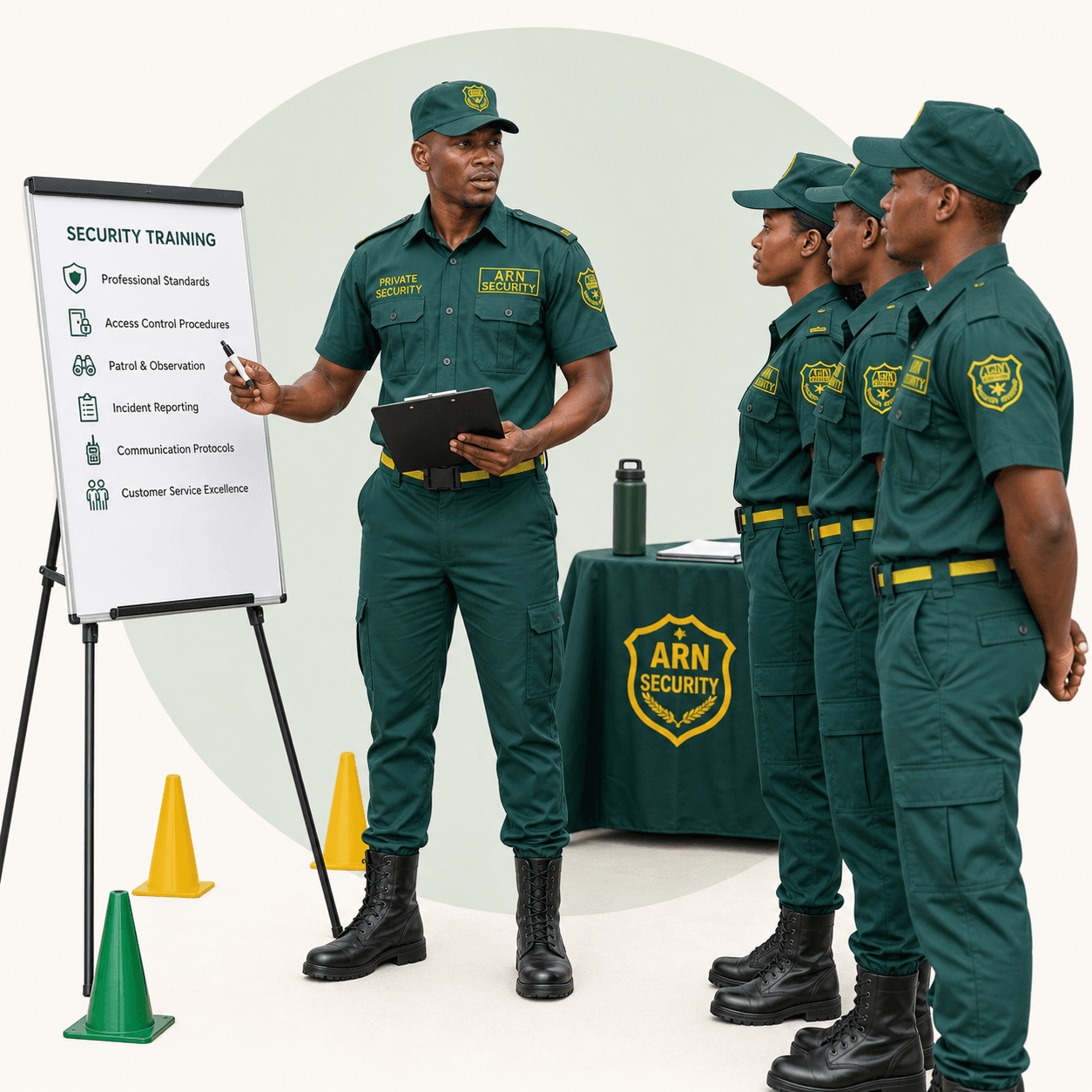
Structured, practical training that turns expected guard conduct, reporting, access control, search, and escalation into repeatable routines.
- Consistent frontline procedures
- Practical assessment and completion evidence
- Clear gaps for supervisor follow-up
Decision brief
At a glance
- Best fit
- In-house or contracted security teams that need stronger discipline, customer care, reporting, search, first-aid awareness, or site conduct.
- First step
- Define the audience, current duties, observed gaps, site context, and required evidence of completion.
- Preparation
- Share team numbers, roles, shift constraints, procedures, recent incidents, venue, and any required modules.
- Implementation range
- From a focused half-day session to a multi-day cohort programme. Timing depends on audience size, modules, practical exercises, assessment depth, and shift release.
Included work
What ARN provides
- Training-needs review
- Module and delivery plan
- Practical exercises and assessment
- Attendance, completion, and follow-up report
Engagement sequence
How implementation works
- 01
Diagnose
Review roles, procedures, incidents, observed gaps, audience level, and site context.
- 02
Structure
Select modules, sequence, format, duration variables, exercises, and assessment criteria.
- 03
Deliver
Run concise instruction, demonstrations, scenarios, supervised practice, and checks.
- 04
Report
Record attendance, assessment results, completion evidence, and supervisor follow-up.
Service-specific controls
Operational detail
- Modules can cover customer care, access control, search procedure, reporting, communications, first-aid awareness, and escalation.
- Duration changes with audience size, baseline ability, practical exercises, and assessment depth.
- Training evidence distinguishes attendance from demonstrated competence.
Shared readiness
Client preparation and responsibilities
- Release participants for the agreed sessions.
- Provide relevant site procedures and a suitable venue.
- Assign supervisors to reinforce the standards after training.
Assurance
Quality control and review
- Learning objectives and attendance record
- Practical assessment against defined criteria
- Post-training gap and follow-up summary
Scope clarity
Scope boundaries
- Training is not a statutory license unless an approved certification is explicitly included.
- Competence depends on participation, practice, supervision, and workplace reinforcement.
- Specialist medical or weapons training is outside the standard scope.
Operational questions
Questions clients often ask
Is the training tailored?
Yes. Audience, duties, procedures, incidents, and site conditions shape the module plan.
Do participants receive completion evidence?
The agreed scope can include attendance and assessment records; certification status is stated clearly.
Can supervisors receive follow-up findings?
Yes. The completion report can identify common gaps and practical reinforcement priorities.
Layered protection
Related services
Choose the next useful step
Turn the service brief into a site-specific plan.
Use the guided report for a structured first read, or speak directly with ARN about the site and operating context.